By Darren Vaughan
Communications Director
The boreal toad may be small, but the challenges it faces can reveal the changes affecting wetland ecosystems across the Southwest, including right here in New Mexico.
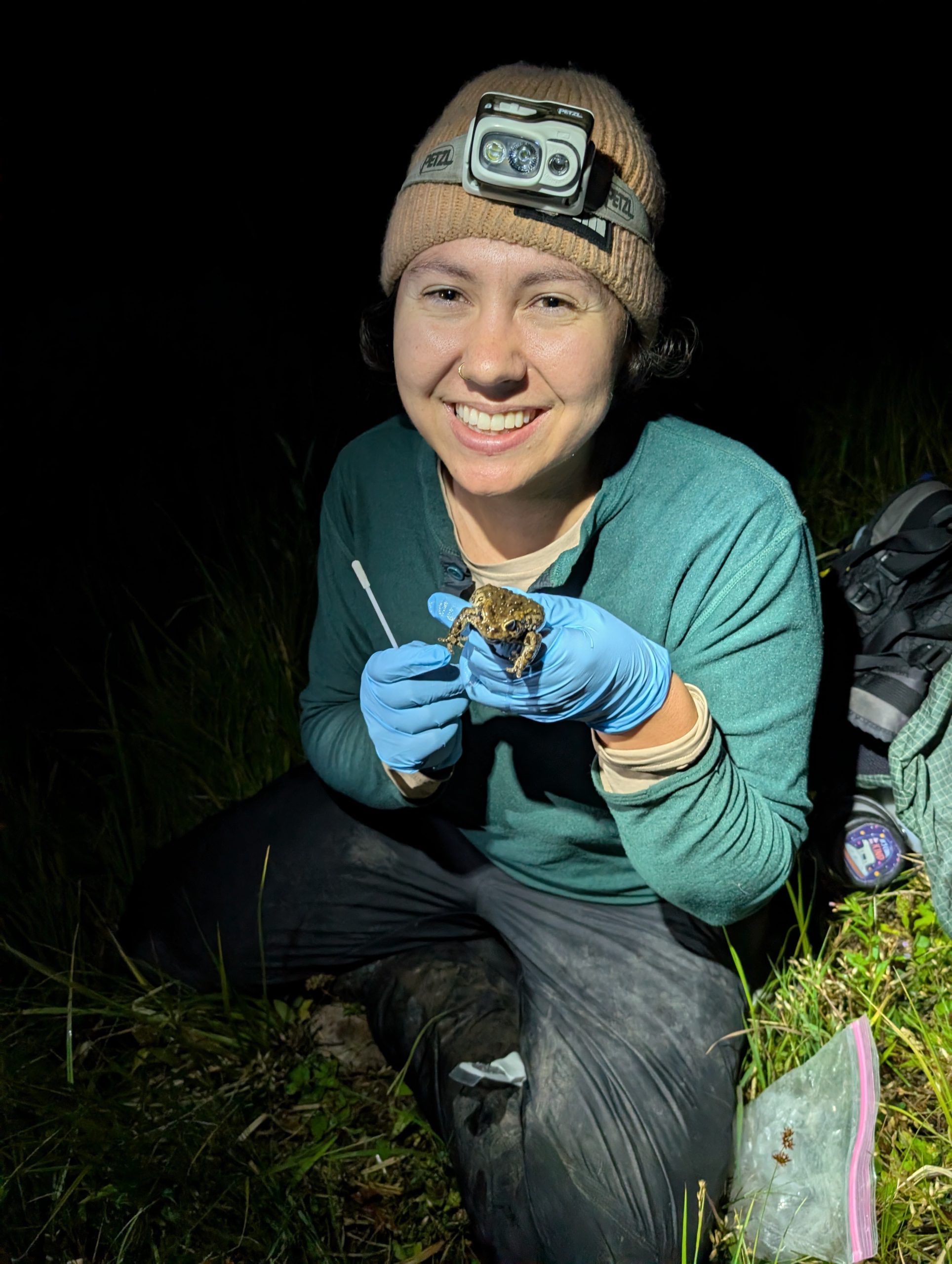
For Jenna Zarlingo, understanding those changes means spending long days and nights in the mountains of Rio Arriba County, looking for the boreal toad — a species that researchers haven't seen in the area since 2023.
Zarlingo, a graduate researcher from Arizona State University studying amphibians and wetland ecosystems, is leading a research project examining the challenges facing the boreal toad, as well as what it needs to survive and whether climate change is affecting its habitat in the Carson National Forest.
The research is funded through the Department's Share with Wildlife program, which supports wildlife research, habitat enhancement, education and rehabilitation projects, with a focus on Species of Greatest Conservation Need (SGCN). The boreal toad is listed as endangered in New Mexico and is considered a Species of Greatest Conservation Need in the latest edition of the State Wildlife Action Plan.
The Share with Wildlife program was established in 1981 to benefit wildlife species across the state that do not receive funding from other sources. Share with Wildlife is largely supported through public donations, license plate sales and the state income tax check-off.
"The boreal toad is a species with very limited distribution in New Mexico, and one for which the Department has consistently worked to ensure its continued existence in the state," said Dr. Ginny Seamster, the Department's assistant chief for technical guidance. "We were excited to see Arizona State University's project proposal focused on the use of non-invasive approaches for surveying this rare animal and its consideration of the effects of environmental change on this species."
The boreal toad plays a major role in the ecosystem, both as a predator for insects and small invertebrates, and prey for other wildlife. They are dependent on water and are very sensitive to environmental change, which makes them an important indicator species for the overall health of their wetland habitat.
"The subspecies has been considered extirpated from the state since likely the 1990s, and we've been working to use stock from Colorado and Wyoming to restart a population in northern New Mexico since 2008," said Leland Pierce, the Department's wildlife biologist for reptiles and amphibians. "We've had survivorship, but no breeding since then."
Thus, the research seeks to answer what conditions are necessary to ensure that boreal toads can thrive in New Mexico.
"We're excited to learn what the ASU team discovers about this understudied amphibian SGCN and its habitat," said Karen Gaines, the Department's Share with Wildlife coordinator. "There is so much more information that our Department biologists need to know in order to better manage this species as our climate changes and diseases that profoundly affect amphibian populations are spreading across the landscape, so it's incredibly important to conduct this research now."
A passion project
For Zarlingo, the project represents an opportunity to return to the amphibian and wetland work that first drew her to wildlife research. She began her career working with amphibians and later took seasonal wildlife technician positions involving a variety of species. The opportunity to return to amphibian research while adding new skills along the way was too good to pass up.
"It sounded perfect because it had a field component and a habitat component, which was what I was used to working with," she said. "But then there was also the disease ecology part that I didn't have experience in, and I just wanted to learn."
The boreal toad project has allowed Zarlingo to do just that.
Zarlingo, professor Heather Bateman, and assistant professor Molly Bechtel each bring their expertise to the project. Associate professor Fabio Suzart de Albuquerque has also played a major role as a faculty mentor and investigator, helping to model biodiversity and toad distributions.
The team is examining habitat, disease ecology and landscape changes using field surveys, DNA sampling, remote sensing and habitat modeling.
A tough place to start
When researchers began their fieldwork in 2025, they found no boreal toads in the study area.
This wasn't what researchers had hoped to see.
"I certainly thought we would see toads right away," Zarlingo said. "I thought that we were going to do some habitat suitability studies based on where the toads were. Instead, it ended up being a really good opportunity to kind of expand our questions. We also get to start to tackle the question of maybe why those toads weren't there at the beginning."
The absence of toads changed the research, but the project remains incredibly important. Researchers instead began looking at changing habitat conditions that may have led to the species no longer being seen in the area. This information and other data can help the Department determine what steps it must take to restore the boreal toad to New Mexico.
Looking at the whole picture
Researchers are doing far more than just looking for and counting toads as part of this project.
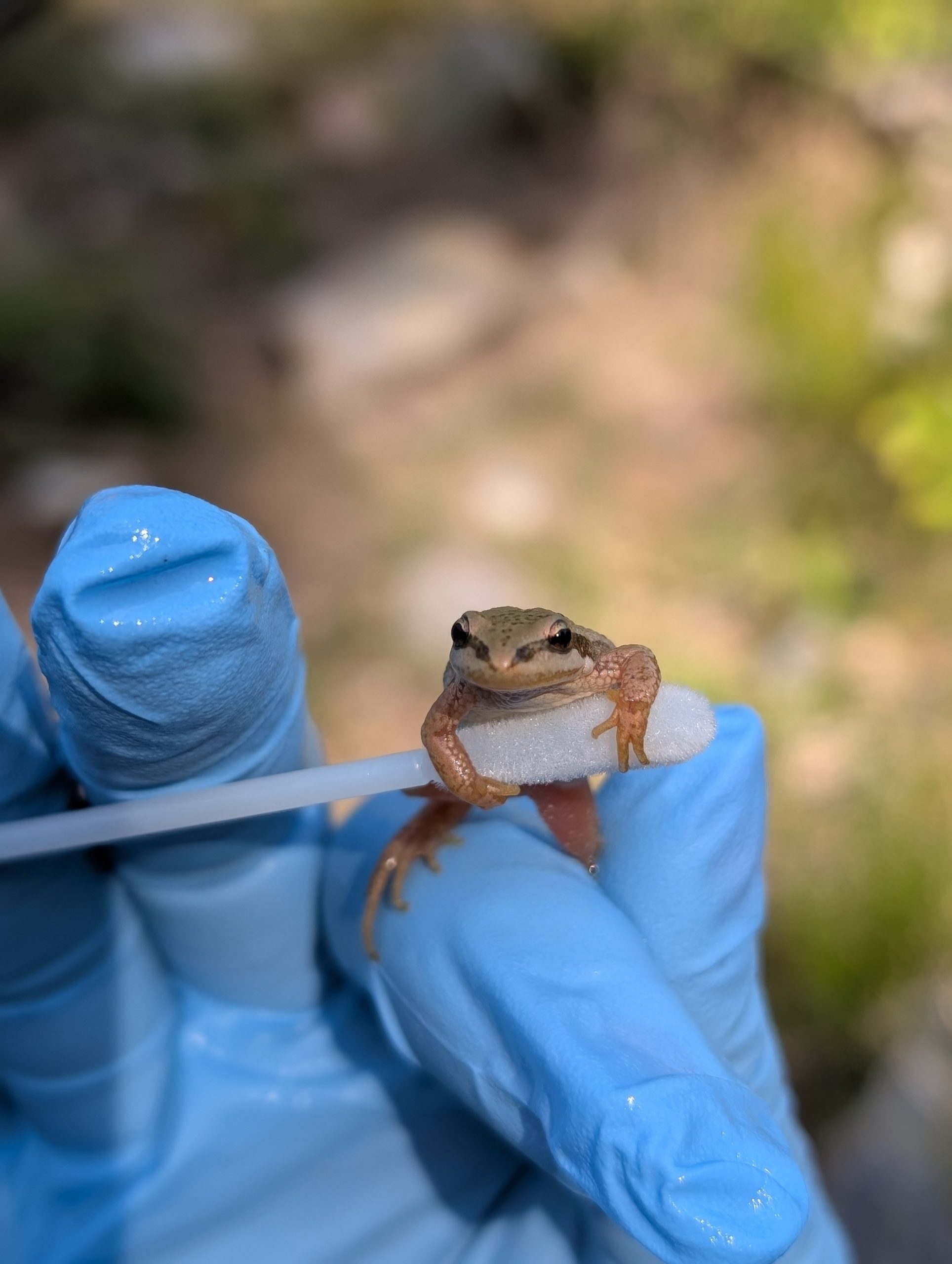
They're capturing these toads and other amphibians during surveys and noninvasively collecting tissue samples to test for pathogens. In 2025, researchers were able to collect 13 such samples by gently swabbing the skin of each captured amphibian, then releasing the animal back into the wild. The total number of samples has since increased to 56, broadening the diversity of organisms that will be analyzed.
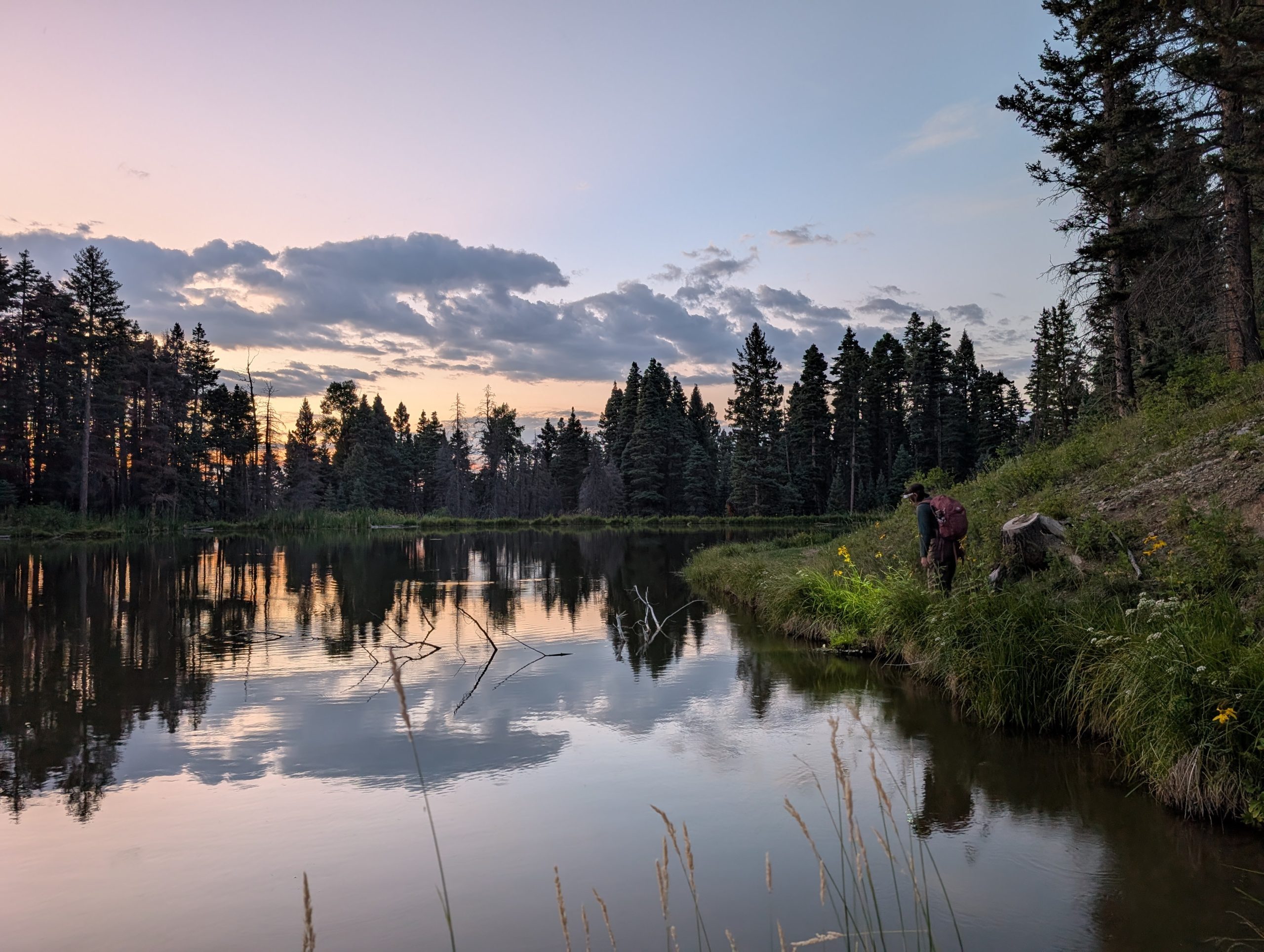
They're also using remote sensing to get a better sense of how the landscape and habitat are changing, which is crucial for a species that relies on water. The researchers have found that the total surface area of waterbodies in the study area is shrinking, which is a cause for concern for the long-term future of many wetland species, including toads.
"Our systems are changing," Bateman said. "Our summers are hot, droughts are longer, we have less snowpack and we have less water available for people and for nature."
These changes affect numerous organisms that depend on the health of wetland systems. Studying a species that is so closely tied to water allows the researchers to understand more than just one species.
"Studying organisms that are tied to water is important for understanding what nature needs," Bateman said. "And it's also important for what people need. We all need water in the Southwest."
Building on new knowledge
Through this project, the Department and its partners can use data to make informed decisions about the future of the boreal toad in New Mexico. Information about habitat conditions, disease, water availability and landscape changes provides a much more complete picture of the challenges boreal toads currently face, and what can be done to improve those conditions. It can also inform potential restoration efforts.
Researchers noted that Pierce has been a particularly valuable resource.
"There are a lot of folks from the states to the federal agencies to the zoos and to academia that care for this toad and want to see it keep on keeping on despite a deadly fungus and now bad winters and Jenna has jumped right in to help with that," Pierce said. "I'm always happy to support folks that care for our wild things."
Zarlingo said the collaboration between everyone involved has been a key element of the project.
"I love the intersectionality of this project," she said. "Having mentorship from multiple agencies, but also multiple people with different expertise and different components of this project that all come together to focus on this one endangered species, I think is really meaningful."
A small toad with big answers
The research is still under way, and final conclusions are still to come.
However, the information gathered so far is already providing new insight into the environmental conditions affecting boreal toads and other wetland species.
"The story that we're slowly writing here doesn't necessarily bode well for the toad," Bechtel said. "I still think that this knowledge is power and that we can use that knowledge to continue to manage them in the best way that we can."
Thanks to partnerships between researchers and programs such as Share with Wildlife, studying even the smallest species can help answer big questions.