By Dela Joyner
North Area Public Information Specialist

How can studying fish genetics reveal their origins, show how their populations have changed over time and guide effective management strategies for the future?
The New Mexico Department of Wildlife and the New Mexico Cooperative Research Unit, a partnership between the U.S. Geological Survey and New Mexico State University, are partnering to learn just that through a study of largemouth bass populations across the state.
NMSU graduate student Addison Mueller, advised by Dr. Kasey Pregler, is working on his thesis aimed at answering a question that we currently don’t have a clear answer for: What are the genetics that make up New Mexico’s largemouth bass populations, and where did they come from?
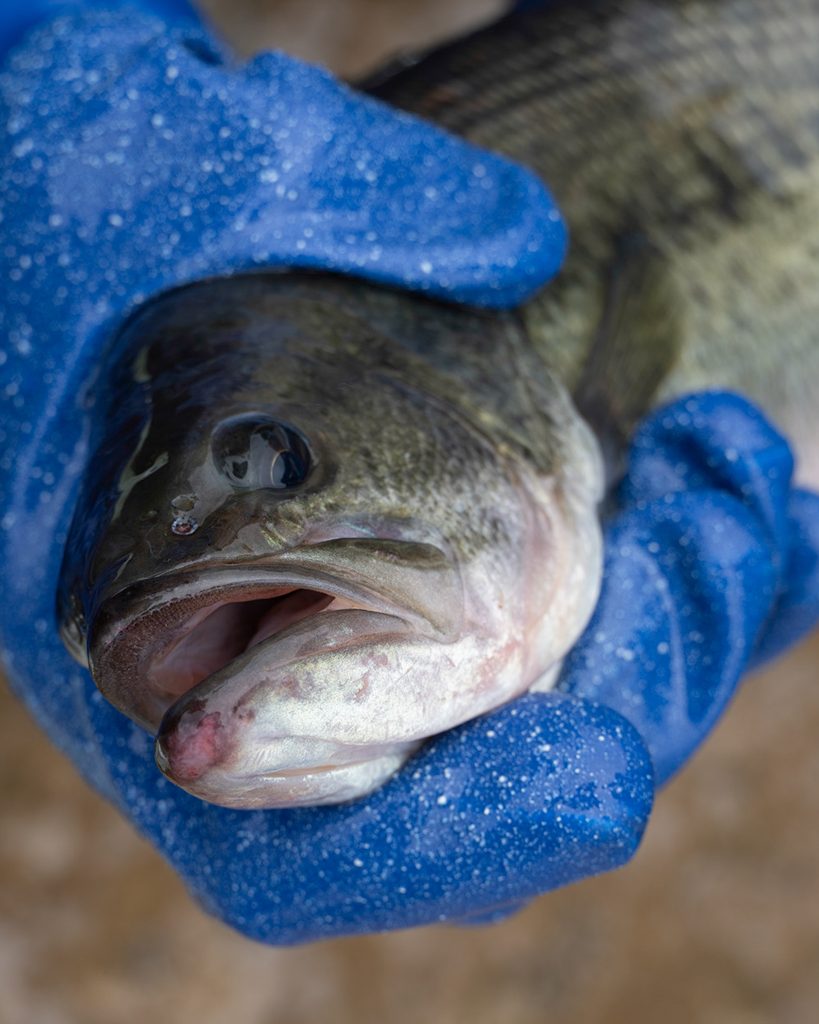
“Largemouth bass are an iconic American fish,” Mueller explained. “It’s a fish everyone knows, but we don’t really know a lot about them as far as the genetic structure goes in New Mexico.”
Mueller, who grew up fishing in the coldwater trout streams of Montana, says that the genetics of the black bass species have drawn a wave of scientific interest for decades.
The data gathered through Mueller’s work can provide valuable information for future stocking decisions, hatchery management and the conservation of potentially unique largemouth bass populations. For NMSU, it provides an opportunity to conduct applied research that addresses a real-world wildlife management question in New Mexico.
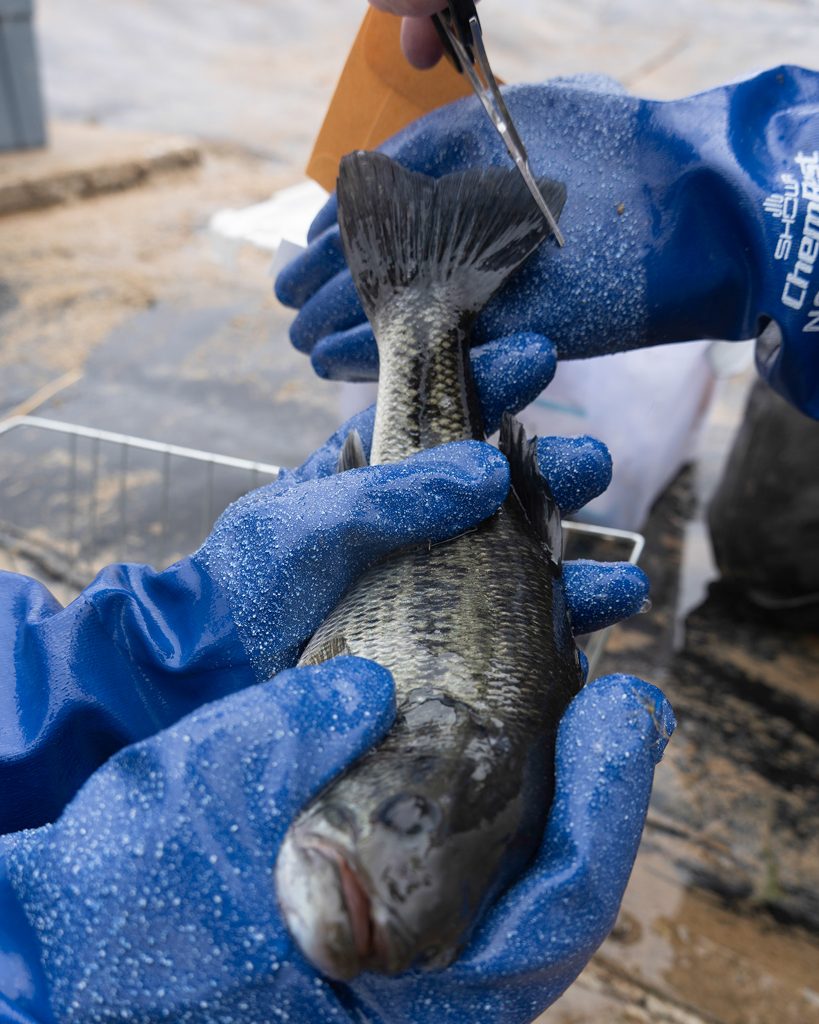
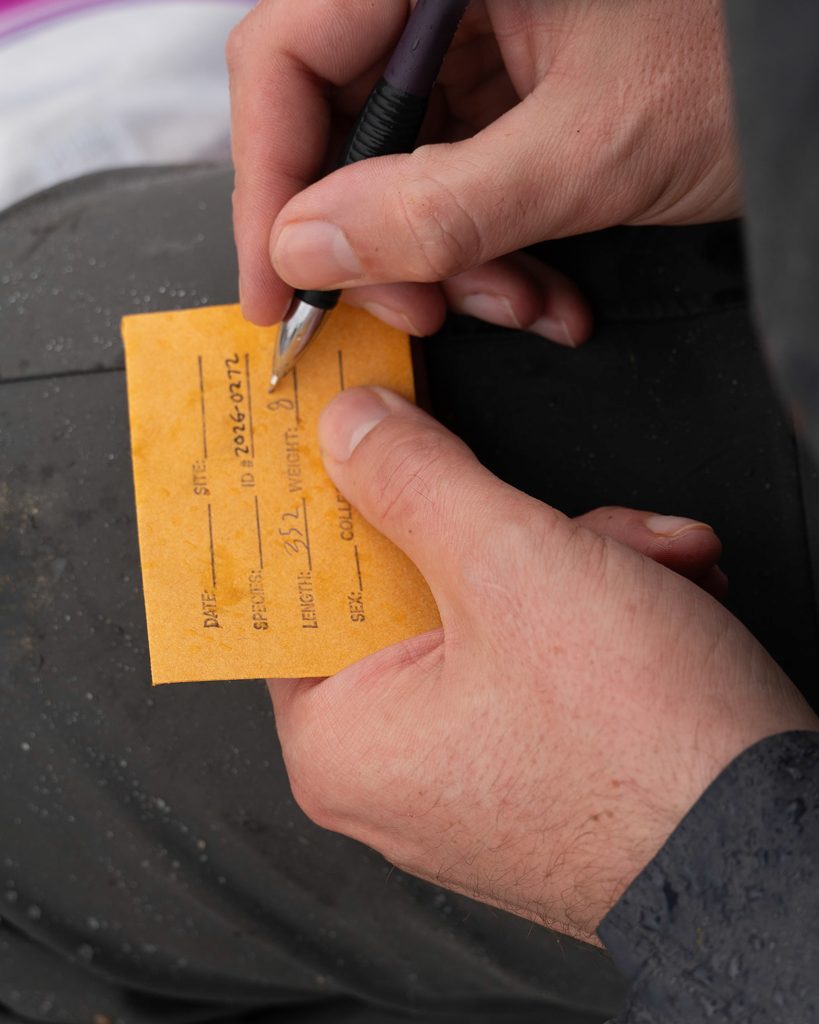
Mueller is sampling largemouth bass populations from around the state. Each sample consists of a small triangle-shaped fin clip taken from the caudal (tail) fin. The process does not harm the fish, but it provides enough tissue to obtain genetic data. After collection, the samples are sent to the lab for analysis, which will make up the bulk of Mueller’s thesis work.
New Mexico has long claimed to have a native population of largemouth bass in the Pecos River drainage, meaning that populations were here before human settlement. That claim has never been genetically confirmed, and this project, with funding from the Department, is the first real attempt to test that theory.
“This project has the potential to support a native population of largemouth bass in New Mexico,” commented Edward Enriquez, the Department’s warm water sportfish supervisor. “By genetically mapping populations across the state of New Mexico, it can guide further stocking of largemouth bass from the state’s warm water hatchery in Santa Rosa. Should we be able to determine that the Black and Pecos rivers contain historically native largemouth bass, we can make better conservation actions to preserve these potentially unique populations.”
This project isn’t just about identifying native origins. New Mexico has stocked largemouth bass across the state with Florida bass, a species known for producing trophy-size fish. They were introduced in small numbers in a few waters, including Bill Evans Lake, which was stocked in 1978 and again in 1996.
Bill Evans Lake holds the record for the largest largemouth bass ever caught in New Mexico, recorded to be 15 pounds, 13 ounces. Mueller’s work will help determine whether that Florida bass genetic signature is still present in the wild populations, and whether hybridization has occurred elsewhere in the state.
“Another key priority is identifying potential genetic differences between populations and determining how those findings can support the broodstock program,” said Matt Zeigler, the Department’s sportfish program manager. “For example, if largemouth bass from Bill Evans Lake are found to have unique genetic diversity, they could be incorporated into broodstock efforts to strengthen and diversify bass populations statewide.”
Adding to the project’s complexity, black bass species are notorious for hybridizing with each other, which can blur genetic lines and make population structure harder to untangle. That’s the part of what makes this kind of baseline work valuable.
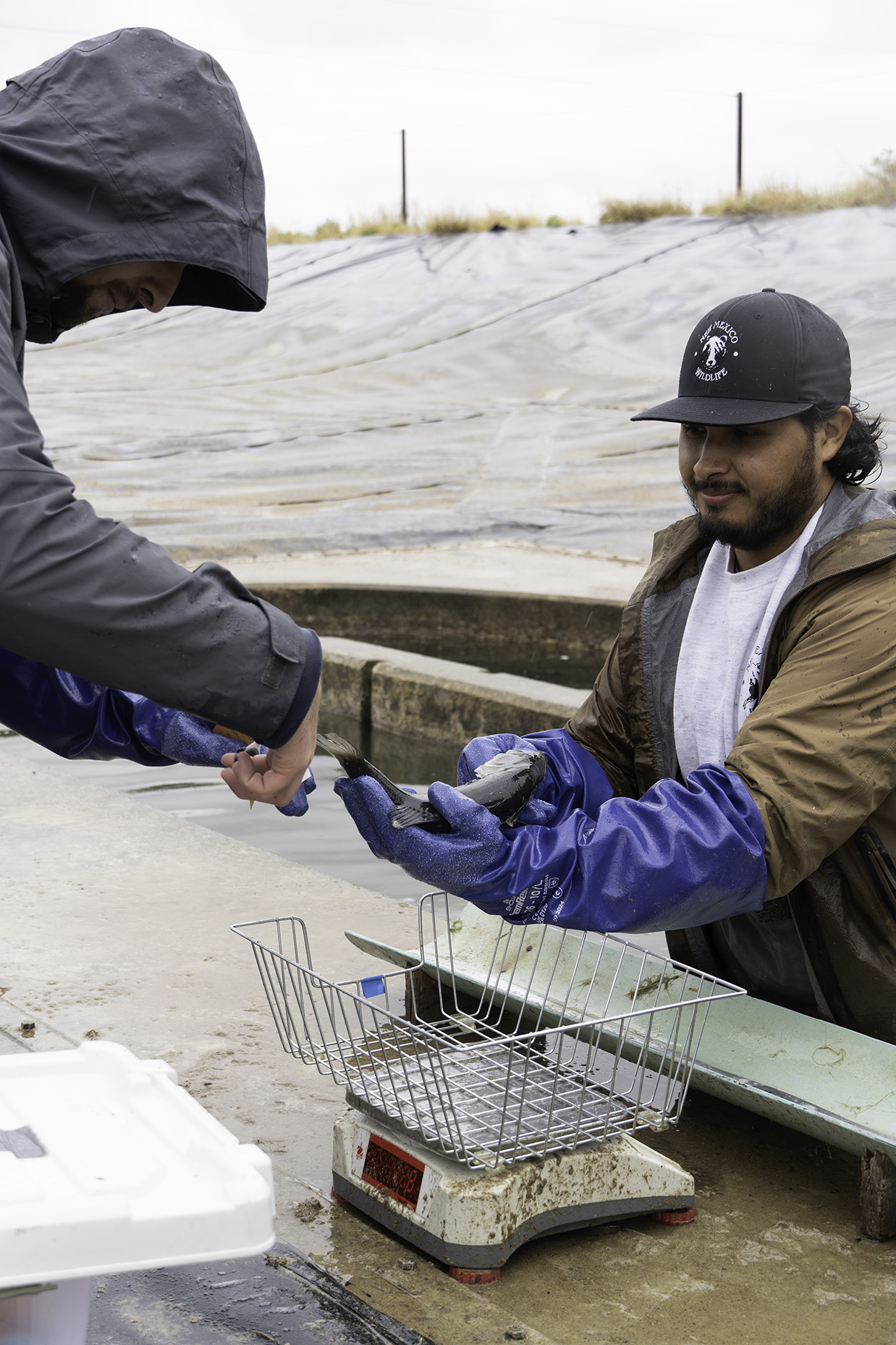
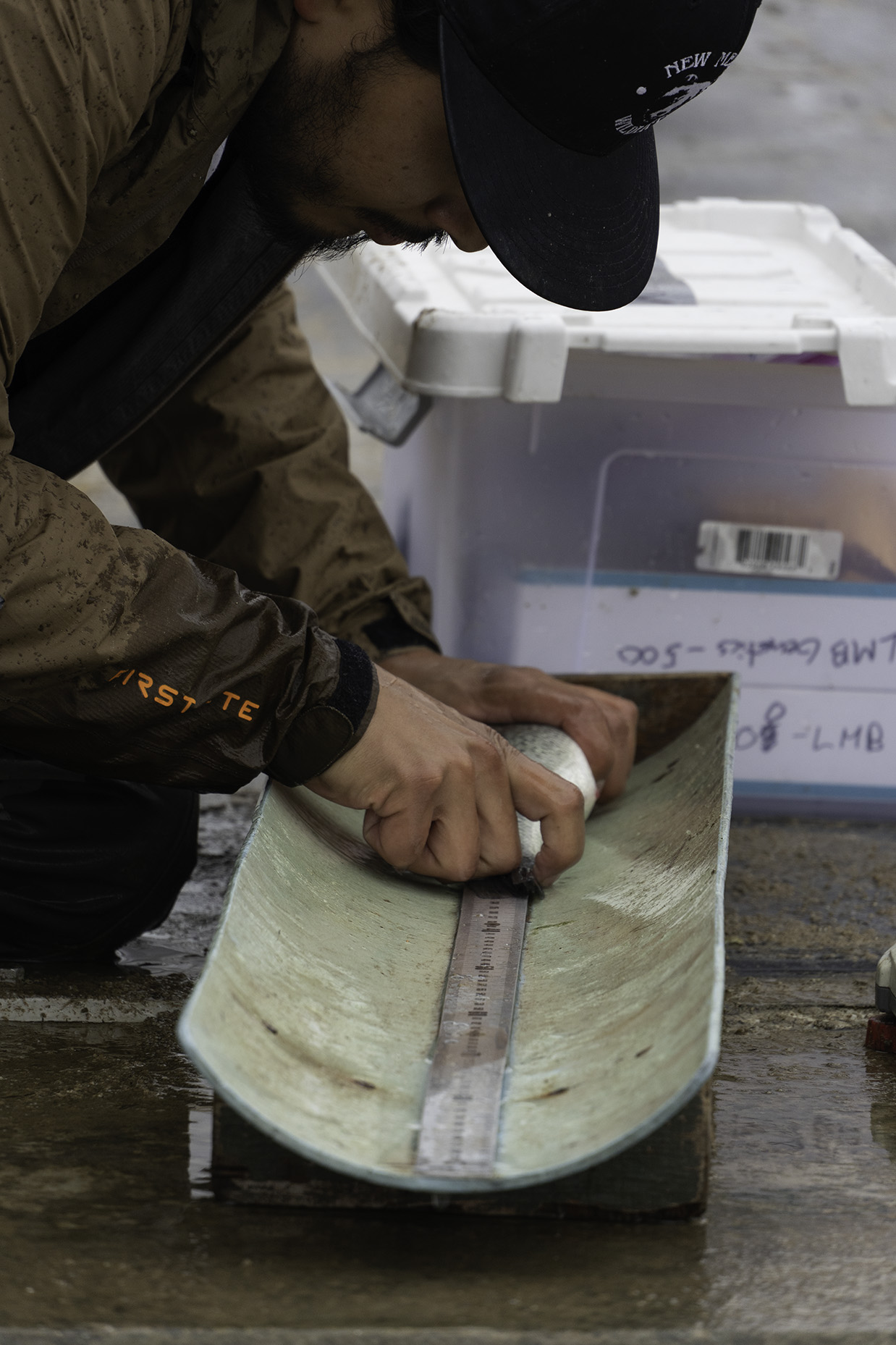
Samples collected from Rock Lake State Fish Hatchery, the Department's warm water facility in Santa Rosa, will also give staff insight into the genetic makeup of the agency's broodstock program, specifically whether the current broodstock still carries genetics linked to fish supplied from out-of-state sources.
"It has been about eight years since our broodstock has been supplemented," said Timothy Lorenzen, the manager for the Department's Rock Lake State Fish Hatchery. "So, it's a timely check. This project will give us a baseline to determine when we need to introduce new genetics to the hatchery broodstock in the future."
Mueller and the Fisheries Management Division staff hope the data will show that largemouth bass populations across the state are healthy and genetically diverse. A less-encouraging outcome would be if evidence suggests that most fish have hybridized or display low genetic diversity, which could indicate inbreeding or a monoculture. Such conditions reduce a population's resilience and can make fish more vulnerable to disease.
If this occurs, agency staff would need to develop a plan to introduce new genetics into New Mexico's bass populations. There is also an important climate component to this study: with New Mexico summers trending warmer and ongoing drought further limiting water supplies, establishing a genetic baseline now, before conditions shift more dramatically, is critical to conserving these fisheries into the future.
"As any angler knows fish need water to live and New Mexico has been in a drought for the past two decades and that has been reflected in New Mexico's reservoirs. Largemouth bass males typically build nests and spawn with females in April-May in most reservoirs at a time when those reservoirs are being drawn down for irrigation. Water levels recede below where bass build nests to spawn, resulting in less successful year classes. The Department has supplemented warm water reservoirs with stocked Largemouth Bass in many of the larger reservoirs to ensure anglers continue to have success while out fishing in New Mexico," notes Enriquez.
Partnering with the USGS New Mexico Cooperative Fish and Wildlife Research Unit at New Mexico State University provides valuable research data that allows the Department to continue to manage New Mexico's fisheries for anglers for many years to come.