By Colleen Payne
Southwest Area Public Information Specialist
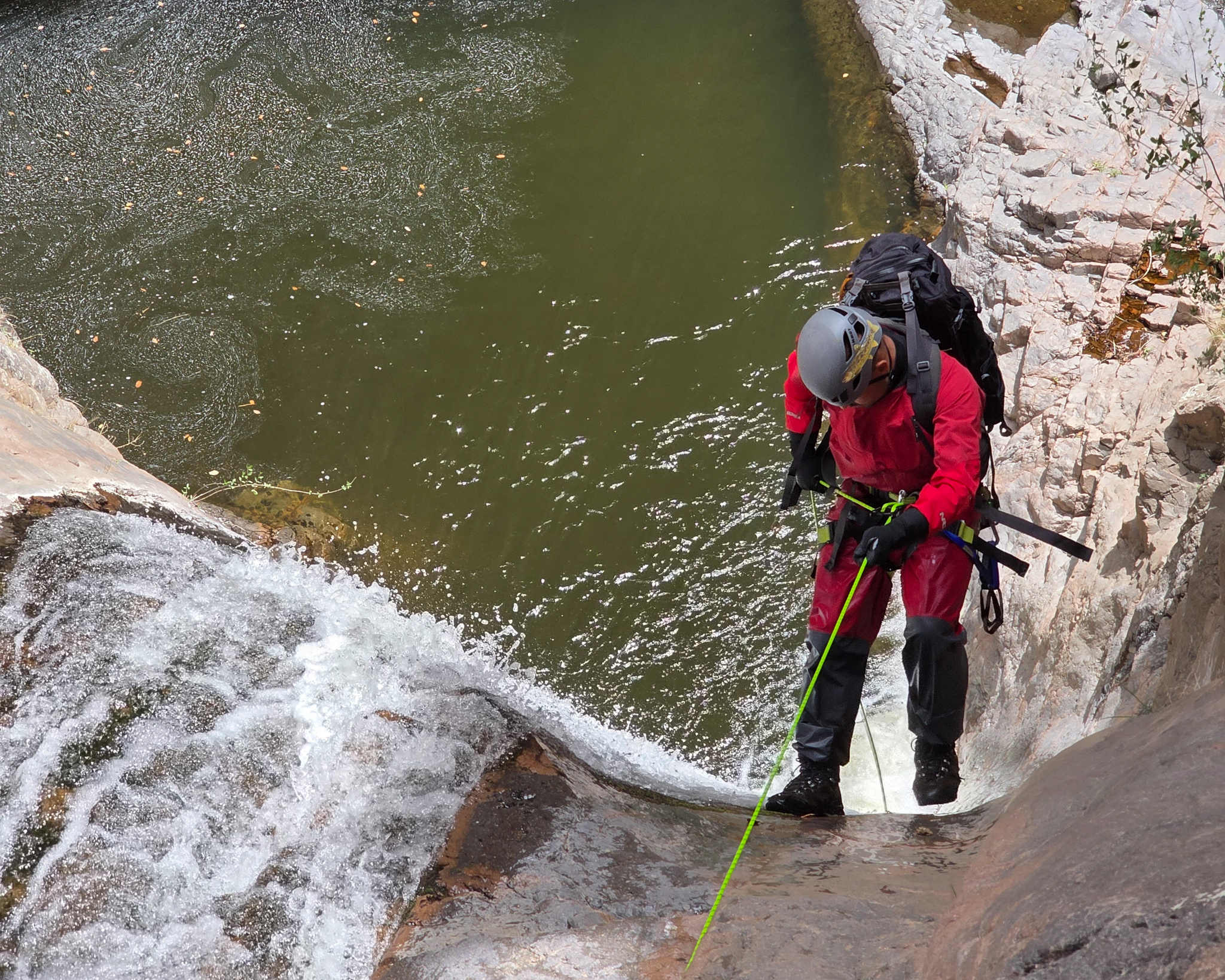
Photo by Colten Lay
Among the steep jagged cliffs at an elevation of 7,200 feet, the West Fork of Mogollon Creek runs through the Gila Wilderness in southwestern New Mexico. Surrounded by rock scree, burn scars and ponderosa pines, the creek is home to many species. But one is missing: the native Gila trout, one of the rarest trout species in the United States.
Its cool, deep pools make it one of several important tributaries across the Gila National Forest for Gila trout recovery efforts in the trout's native home range. For biologists working to restore the species, however, determining whether the creek could support Gila trout meant finding a way into a remote section of canyon that few people have ever seen.
Over the past 70 years, consistent efforts focused on Gila trout conservation set the stage for future recovery actions in historical drainages. As one of the first species listed under the Endangered Species Act, Gila trout have been the focus of recovery efforts by the New Mexico Department of Wildlife, federal partners and conservation groups.
However, the continued threats of drought, fire and flooding have prompted biologists to consider every possible option to identify habitats that can support Gila trout populations. That includes specialized fieldwork in some of the most remote and untouched wilderness areas, including the West Fork of Mogollon Creek.
For Dan Trujillo, the Department's Gila trout biologist, that meant going over the edge, literally.
Within the wilderness, a mile-and-a-half-long section of the creek is accessible only by foot, dry suit and rappelling equipment. After extensive research in the area, it was determined that rappelling into the canyon was the best way to determine whether its waterfalls are natural fish barriers, whether fish are present, and if so, which species live there.
Trujillo is no stranger to outdoor adventure and recreation, but applying those skills to wild trout management required additional training that some may consider unusual for a biologist. Trujillo explains how merging these skills has created a unique opportunity, "I picked up canyoneering as a hobby while living in Utah. Combining one of my favorite recreational activities with conservation has been a rewarding experience."
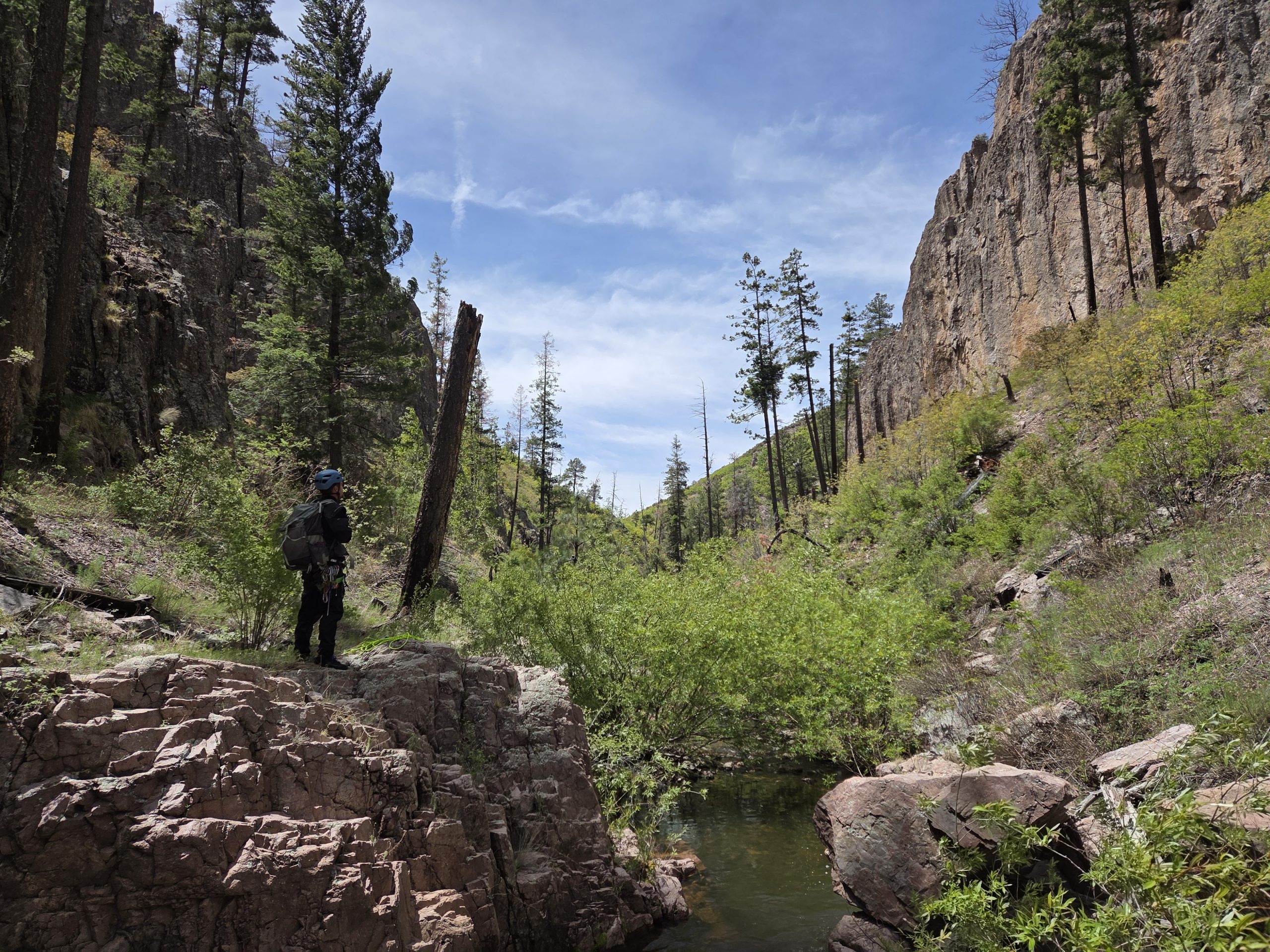
Photo by Dan Trujillo
To prepare for the expedition and complete the fieldwork as safely as possible, Trujillo traveled to southeastern Utah, where he completed a three-day canyoneering and rappelling safety course. By the end of the course, participants had learned about climbing equipment, knot tying, safety procedures and specialized skills for technical canyon descents.
Even with that training, planning the expedition required considerable preparation for such challenging terrain. There is little documentation or mapping of this section of the creek and the weather and nearby Hummingbird Fire left only a short window of time to make the trip possible.
Trujillo and Colten Lay, a canyoneer from Utah, planned to stay overnight, taking ultralight backpacking gear, heavy canyoneering equipment and a pump to collect samples. On the first day, they covered eight miles from the trailhead to the canyon exit. The next day, they made the 2.5-mile bushwhack to the top of the canyon.
From there, the real work began.
Trujillo and Lay rappelled a total of 19 waterfalls and swam through dozens of pothole pools during a partial first descent of the canyon. The lower half had been descended once before, around 2012.
As they made their way through the canyon, they collected water-quality and environmental DNA samples that will help native fish biologists identify which species are present. If nonnative trout are not found and the waterfalls are confirmed as natural fish barriers, Gila trout will likely be returned to the headwaters of the West Fork of Mogollon Creek.
"Rappelling and canyoneering is well beyond the typical duties of a biologist," Fisheries Management Division Chief Kirk Patten said. "Luckily for us and for Gila trout, Dan is an exceptional outdoorsman and was willing to take on that challenge. This is another great example of our team's dedication to New Mexico's wildlife."
For Trujillo, the expedition was one part of a much larger effort to give Gila trout more places where they can survive and thrive.
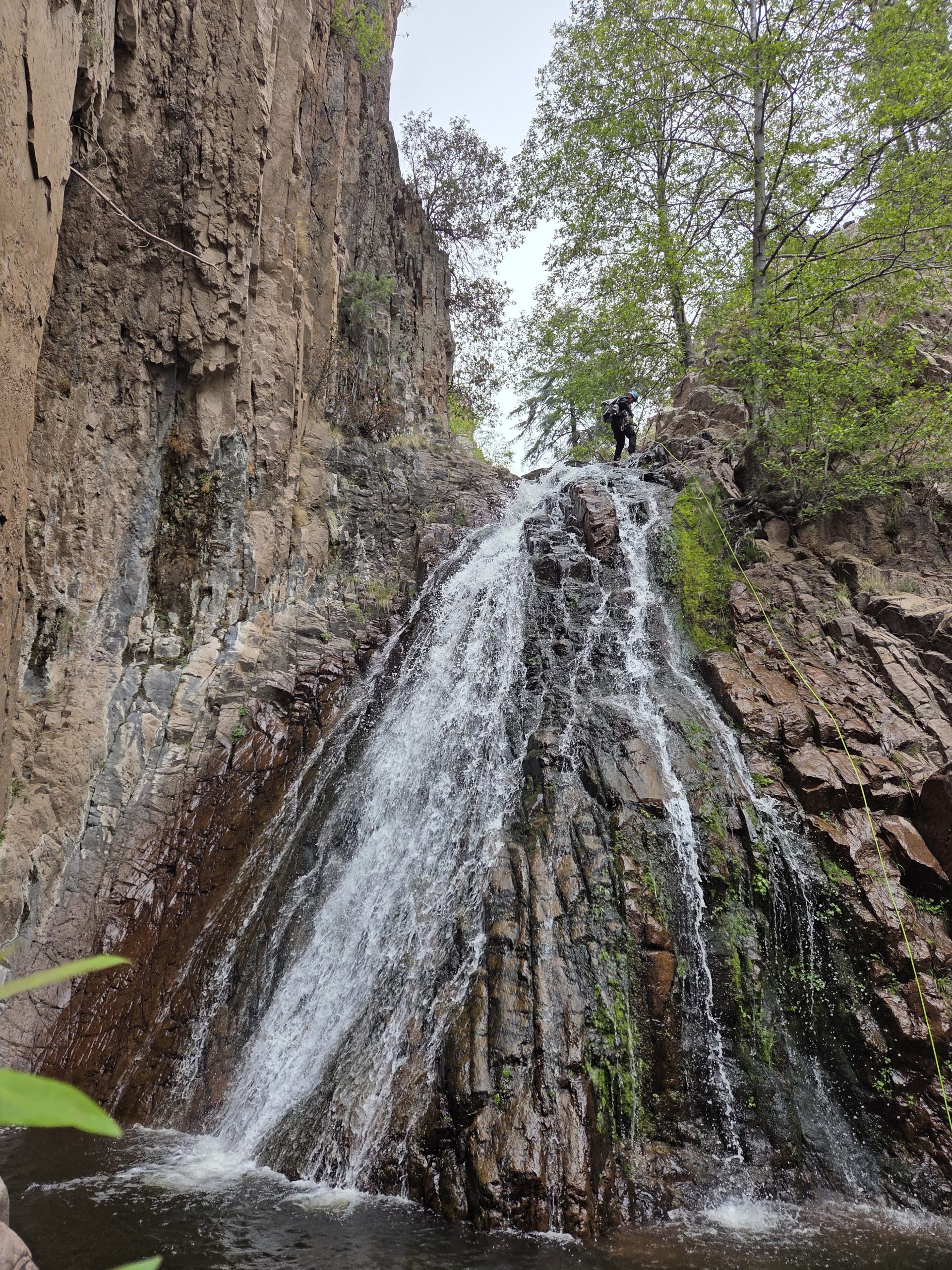
Photo by Dan Trujillo
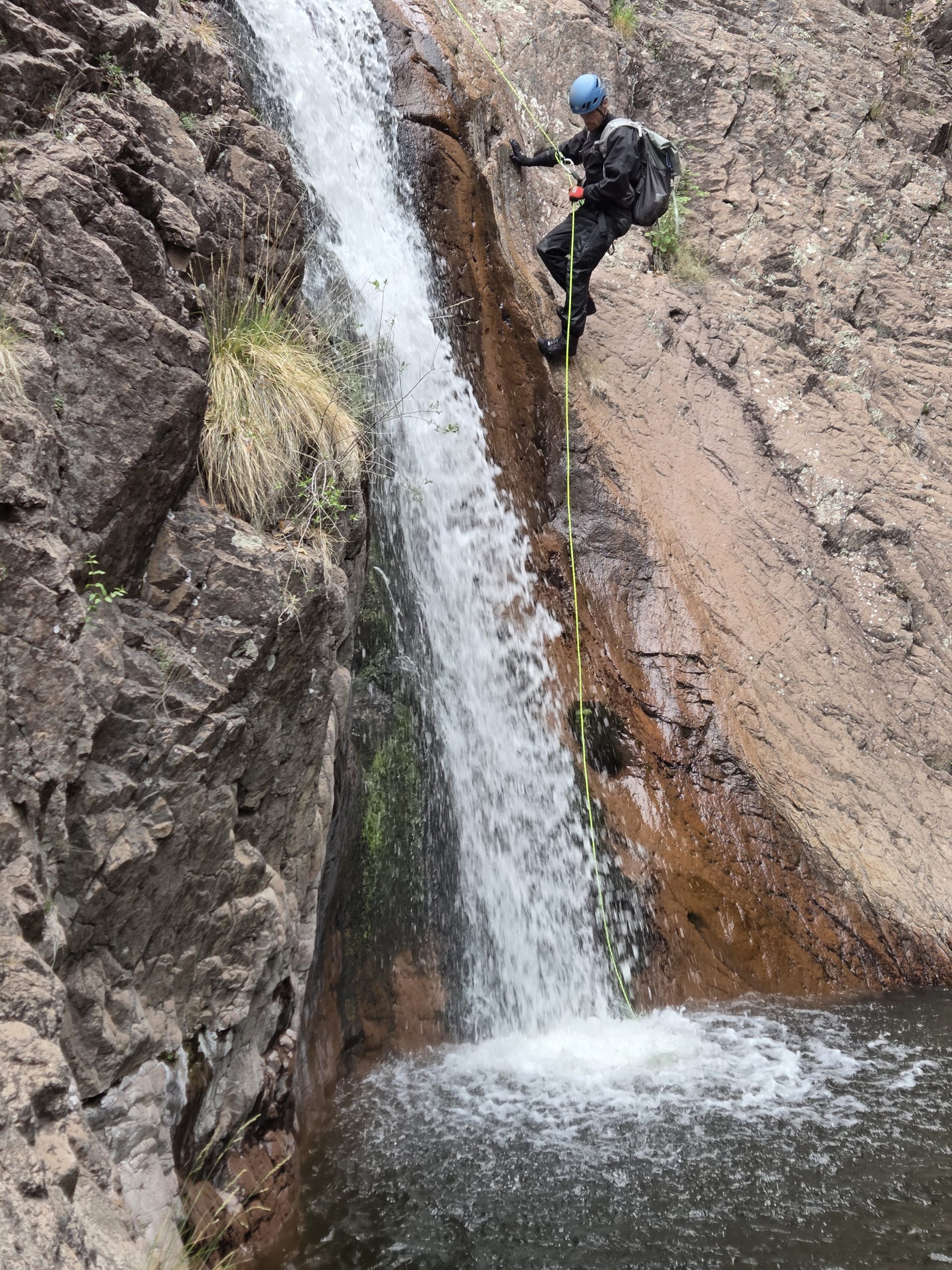
Photo by Dan Trujillo
Finding and protecting places like the West Fork is increasingly important because Gila trout habitat is not immune to the same natural disasters that have shaped the rugged landscape where the species exists. Gila trout thrive in rocky canyon streams, but also in areas prone to wildfire and catastrophic flooding.
Trujillo's role goes far beyond surveying remote streams. Because critical Gila trout populations can be lost during natural disasters, he also maintains a Type 2 wildland firefighter certification, known as a red card. This qualification allows him to work behind fire lines if an evacuation becomes necessary, ensuring he can help safely collect and relocate Gila trout. His training adds an essential layer of protection for one of New Mexico's most vulnerable native species.
That training was put into action during the 2026 Sacaton Fire, which threatened a historic population of Gila trout in multiple creeks in the San Francisco drainage and as far north as Iron Creek in the upper Middle Fork of the Gila River.
"These trout are recognized as a relict lineage, a unique lineage of Gila trout and incredibly important to the genetic diversity and recovery efforts," Trujillo said.
As the fire threatened the area, staff from the Department, the United States Fish and Wildlife Service and the United States Forest Service assisted with evacuation efforts. Within a few hours, nearly 80 wild trout were collected from Iron Creek before forecast thunderstorms triggered catastrophic flooding in the drainage.
The recovered trout were transported from the creek via a specialized oxygenated water tank suspended from a Sandia Helitack helicopter. Once flown back to base camp, they were loaded into the Mora National Fish Hatchery truck and transported to the hatchery in northern New Mexico, where they were quarantined and data was collected on their size, genetics and health condition.
Until a habitat evaluation of the burn scar in Iron Creek is completed, these rescued fish will remain at the Mora National Fish Hatchery. In the future, they may contribute to the broodstock of this specific genetic lineage.
From rappelling over waterfalls in a remote canyon in the Gila to evacuating rare trout ahead of fire and flooding, being a wildlife biologist can take you to some of the wildest places where few people have been before and a chance to use specialized training, skills and equipment to help protect and manage wildlife.
These are the kinds of lengths Department biologists go to for conservation efforts in New Mexico.
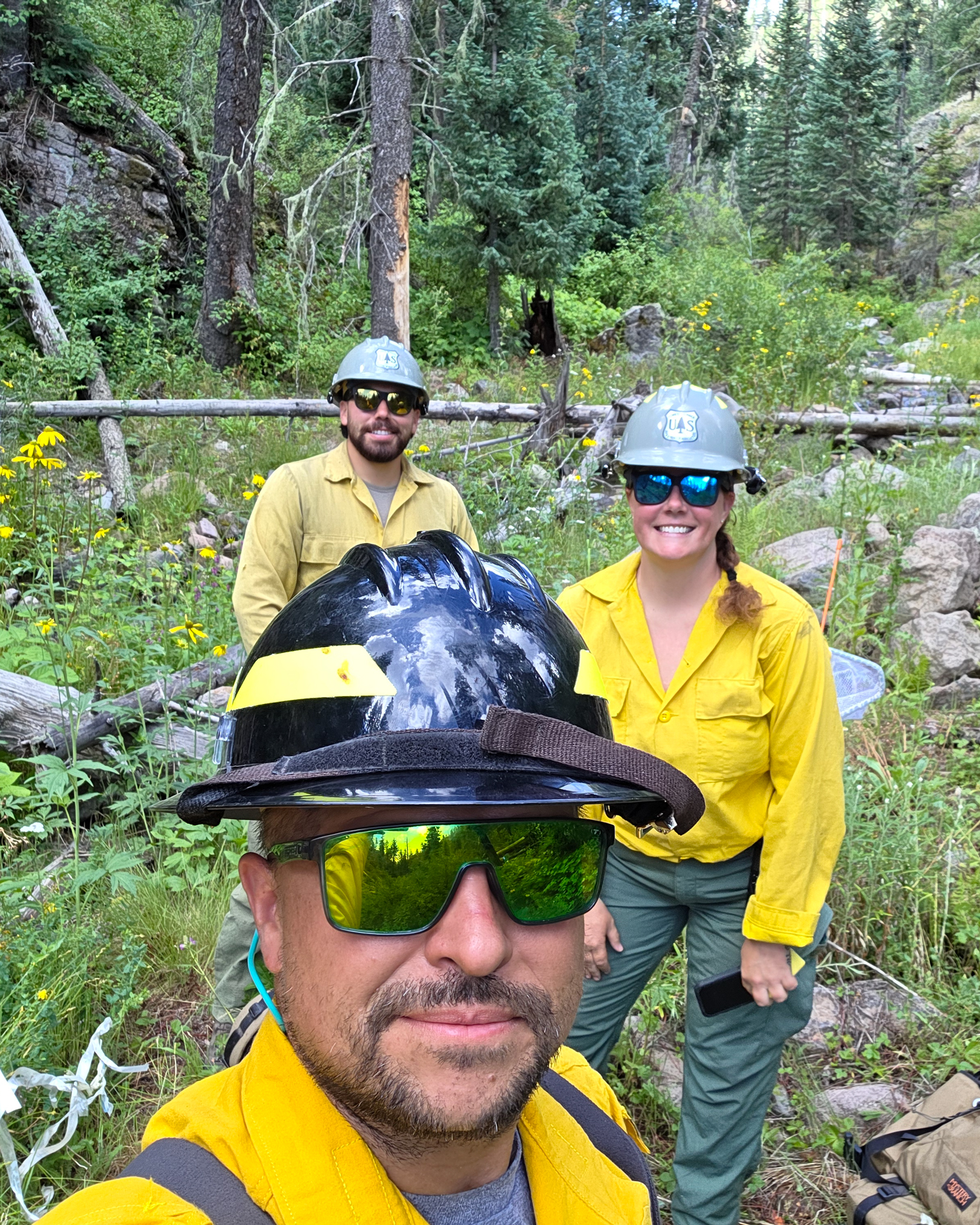
Photo by Dan Trujillo
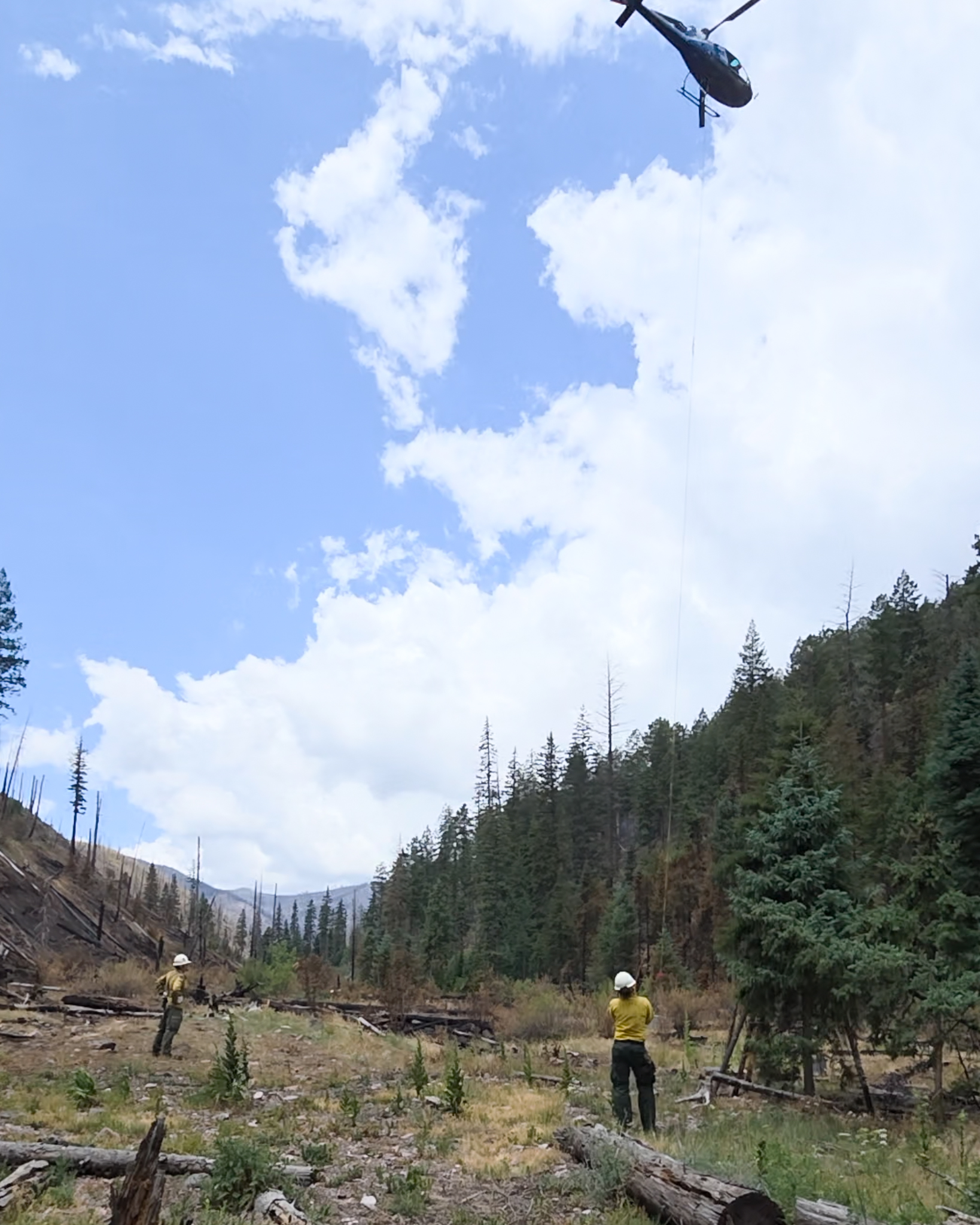
Photo by Dan Trujillo
Screenshot


