By Eric Arce
New Mexico Wildlife Editor
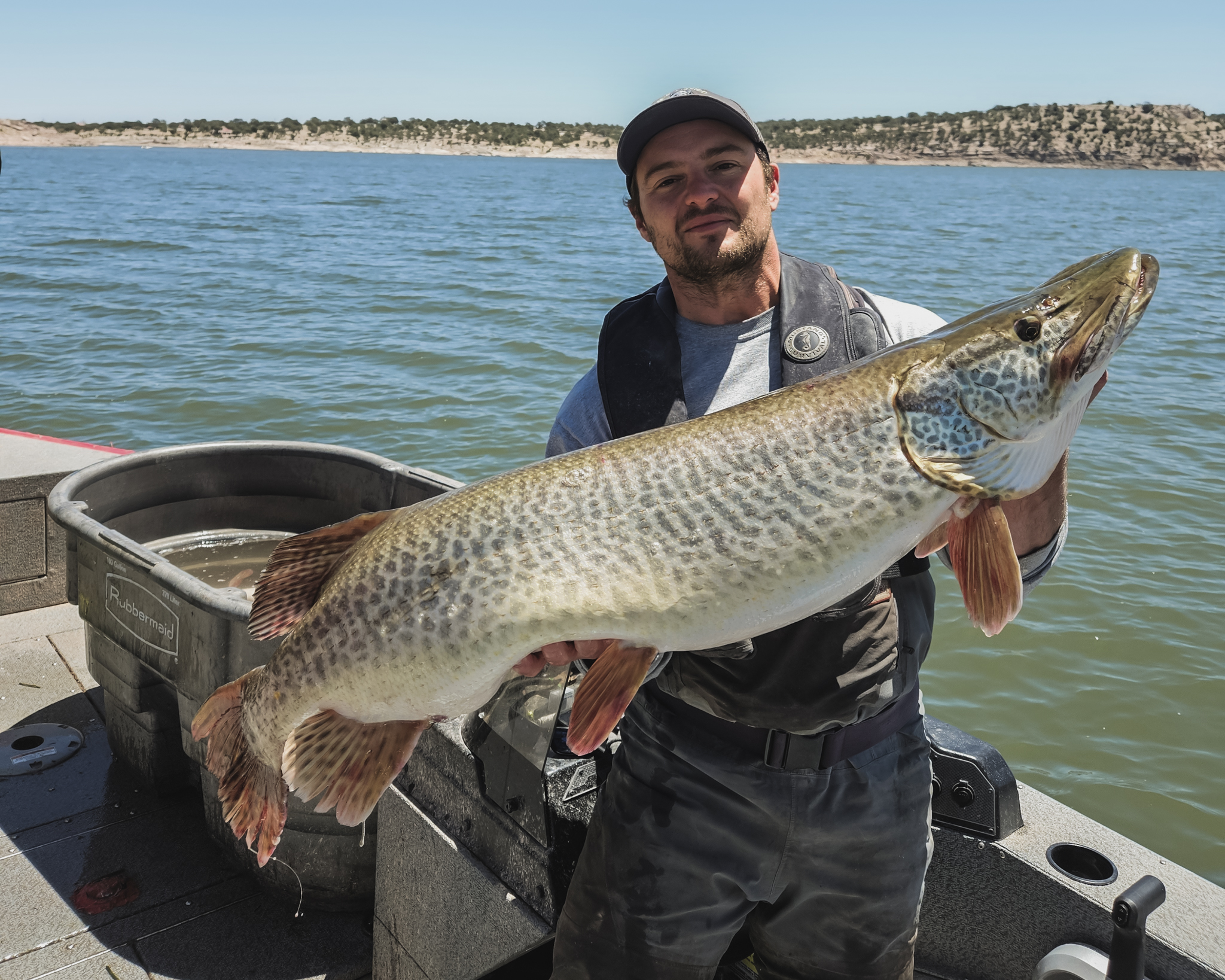
The tiger muskellunge is a sterile hybrid of the true muskellunge (Esox masquinongy) and the northern pike (Esox lucius). Commonly called tiger muskie, these elusive apex predators can grow to over 50 inches long and weigh more than 30 pounds. They are one of the hardest-fighting fish out there at any size, but especially once they reach maturity and old age. Their large size, elusiveness, and aggressive nature are why sport fishermen regard tiger muskie as a true test for anglers. They have a long, cylindrical body with lobe-shaped dorsal and ventral fins far back on the body, near the caudal fin. This body shape allows them to accelerate rapidly to ambush and capture their prey.
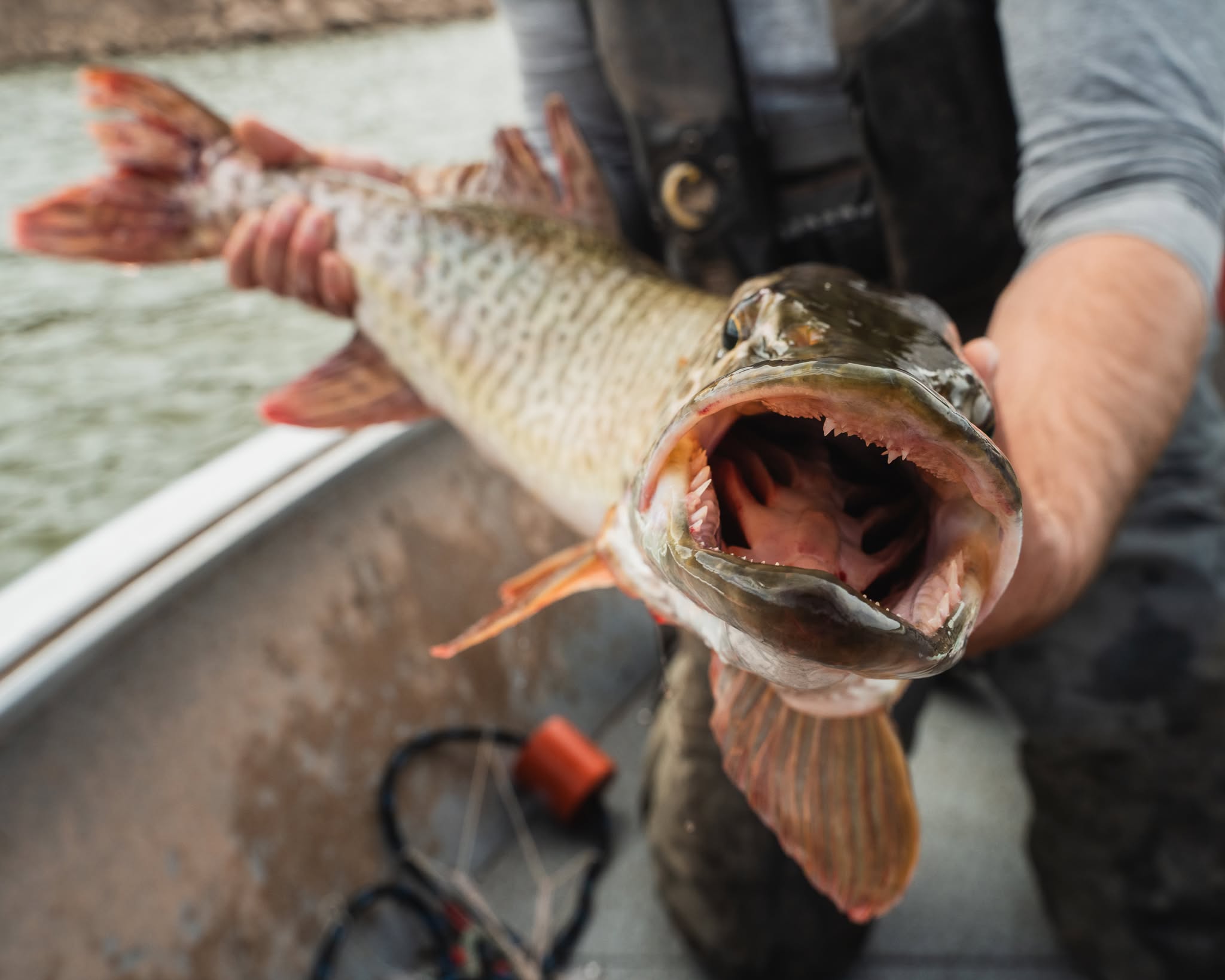
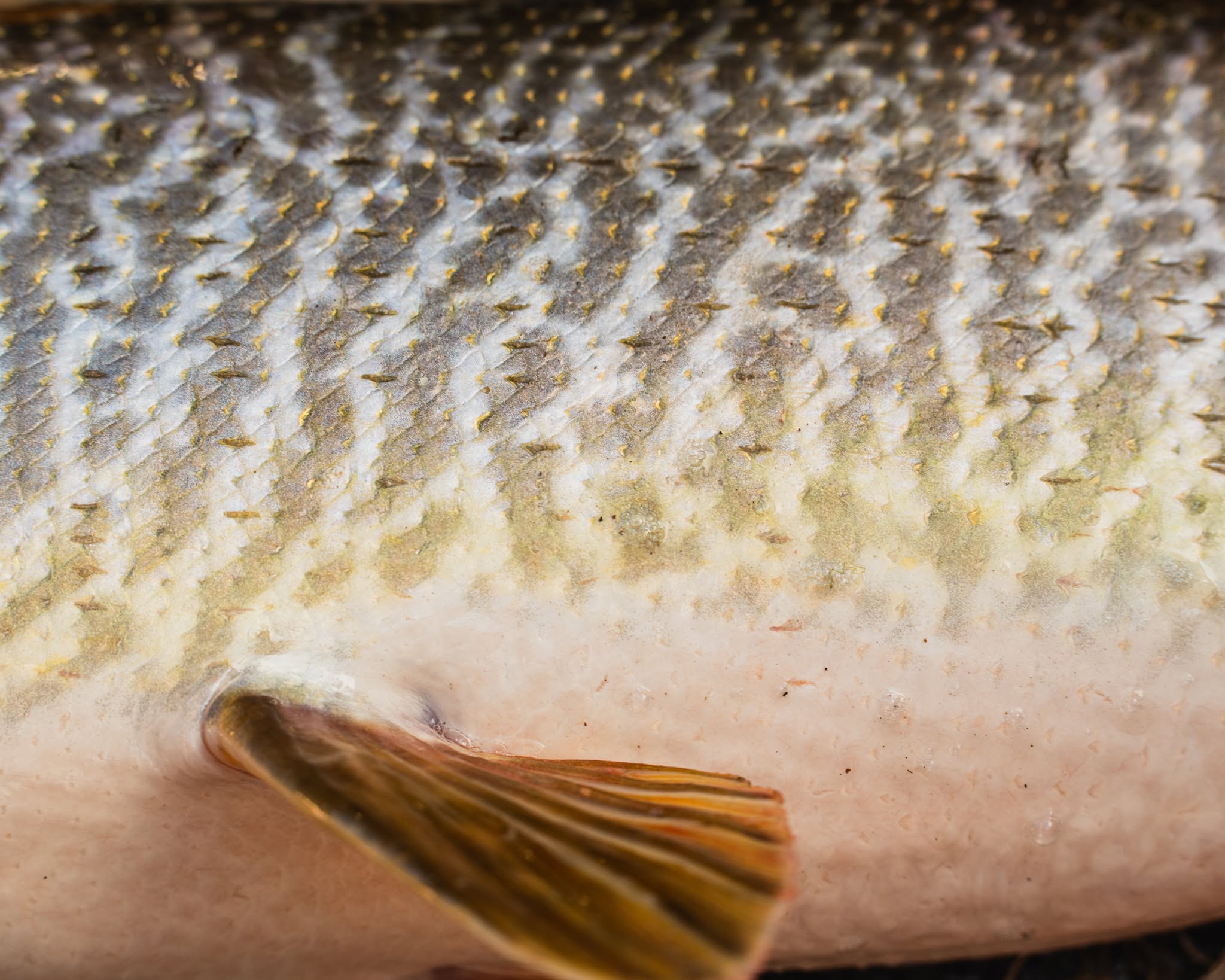
Tiger muskie have up to 700 razor-sharp teeth and their main forage for tiger muskie is other fish species, but they are also opportunistic predators that eat crayfish, frogs and even small birds and mammals. The tiger muskie has a mixture of dark vertical stripes and spots over a light olive-grey body. However, their patterning and coloration can be pronounced or muted depending on the habitat they frequent.
In New Mexico tiger muskies are a popular fish among anglers. This is why Department fisheries biologists conduct tiger muskie surveys twice a year to monitor population levels, fish condition, diet and stocking success to ensure successful long-term management of tiger muskies in the state. Taylor Booth, coldwater sportfish supervisor at the Department, has worked and studied members of the Esocid family, such as true Muskellunge and has fished for pike growing up in his home state of Vermont. Booth has a lot of admiration for muskies, both as an angler himself and a biologist, “In general ,the whole Esocid family of fish really gets me excited. They include muskie, tiger muskie, pike, and pickerel and as a recreational fisherman they’re some of my favorites to catch. Tiger muskie are gorgeous in my eyes with their striped patterning and colorations. Each individual has unique marking so often times you can tell if you’ve caught the same fish before, especially if they have a recognizable quirk in that pattern.”
While angling opportunities are important, the Department first introduced tiger muskie into Bluewater and Quemado lakes in 2003 to help control overabundant populations of white sucker (Catostomus commersonii) and goldfish (Carassius auratus). Goldfish and white sucker negatively impact aquatic ecosystems if their populations are not kept in check. Since the introduction of tiger muskie, there has been a significant decline in the populations of goldfish and white sucker in these two lakes. This corresponding reduction in goldfish and white sucker has also helped improve our rainbow trout populations, in fact reviving them from historic lows. Booth adds, “Tiger muskie are also really useful management tool for fisheries biologists. They have fantastically succeeded where other tactics have failed. In Bluewater and Quemado we tried removing undesirable fish species by hand, using piscicides, and with other predator species to no avail. Tiger muskie managed to get a handle on the Goldfish and White Sucker numbers in under a decade. To me it’s a win-win scenario, they fill their apex predator role perfectly and keep fish populations in check while also providing an exciting sport fishery.”
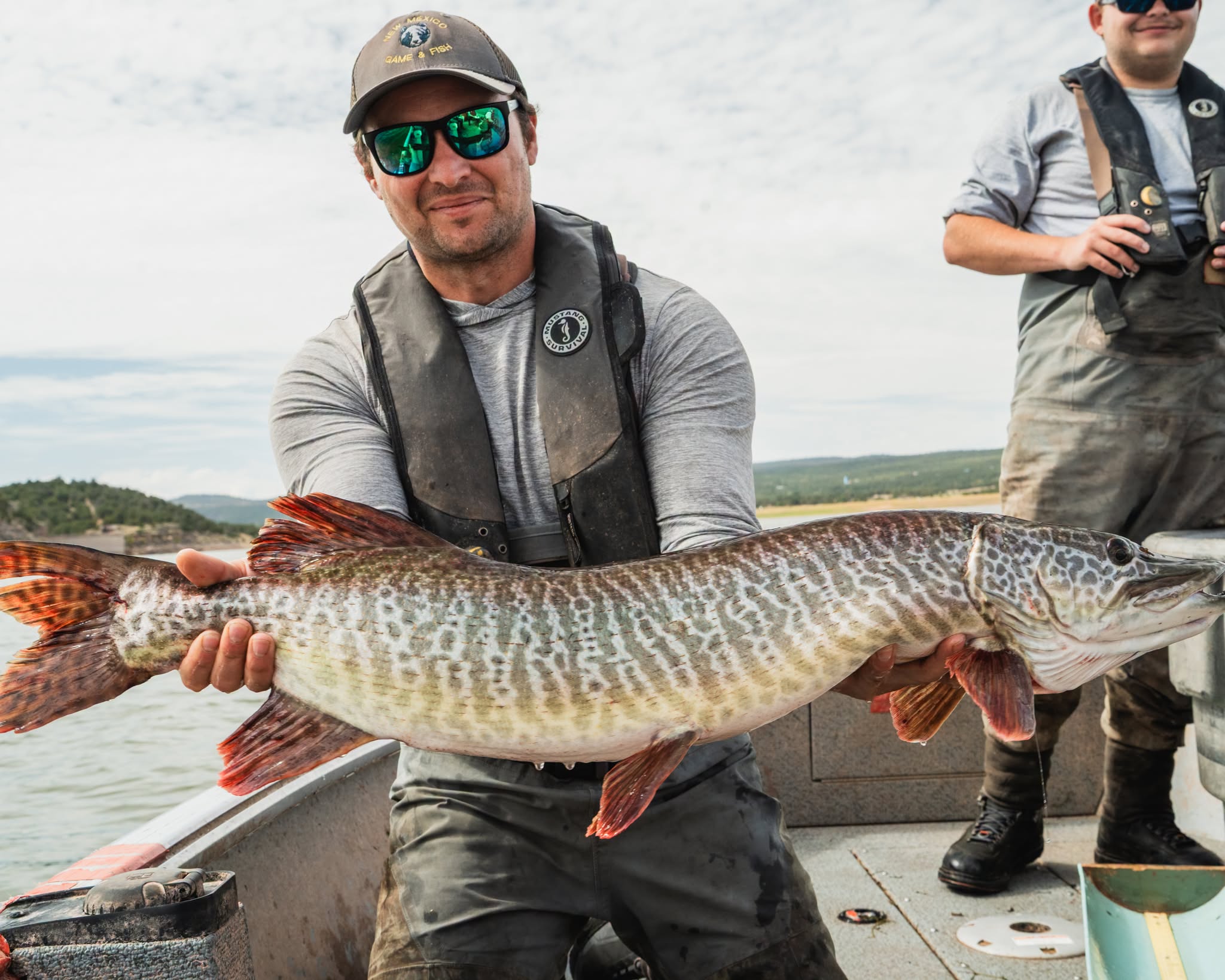
Because of their success and popularity the Department stocks Bluewater every two years, generally in late June or early July. Since tiger muskie cannot spawn, biologists need to supplement their populations for them to persist. “We adjust the stocking numbers from year to year depending on the current population metrics, but for the most part it is roughly 700 fingerling (about 5”) every 2 years. It is the same schedule at Quemado Lake but being a much smaller lake, we usually shoot for about 200-300 fingerlings,” says Booth.
Currently, the New Mexico state record for tiger muskie is 50.5” and 38lb 2oz. The next potential state-record fish is most likely swimming around Bluewater. The Department captured a fish during a 2025 survey that maxed out the 15kg scale, which would have put it at over 33lbs. That fish was marked with a PIT (Passive Integrated Transponder) tag for future identification and released.
To have your best chance at claiming the state record, you need the proper gear. Bring a large, rubber, knotless landing net and needle-nosed pliers, and use a strong leader line (30-50 pound test) when targeting these fish. Popular baits to catch tiger muskie include large bucktail spinners, bass spinnerbaits, swim baits and glide baits. It’s important to remember that the harvest limit for tiger muskie is one fish over 40 inches, so bring a tape measure. Visit our website at for more information on gear requirements and release techniques. Good luck, hopefully you land a state record or simply the trophy catch muskie of your dreams.